
Oil Portrait Commission Procedure
Once the concept has been established, the question becomes: How do you turn that concept into a convincing reality?
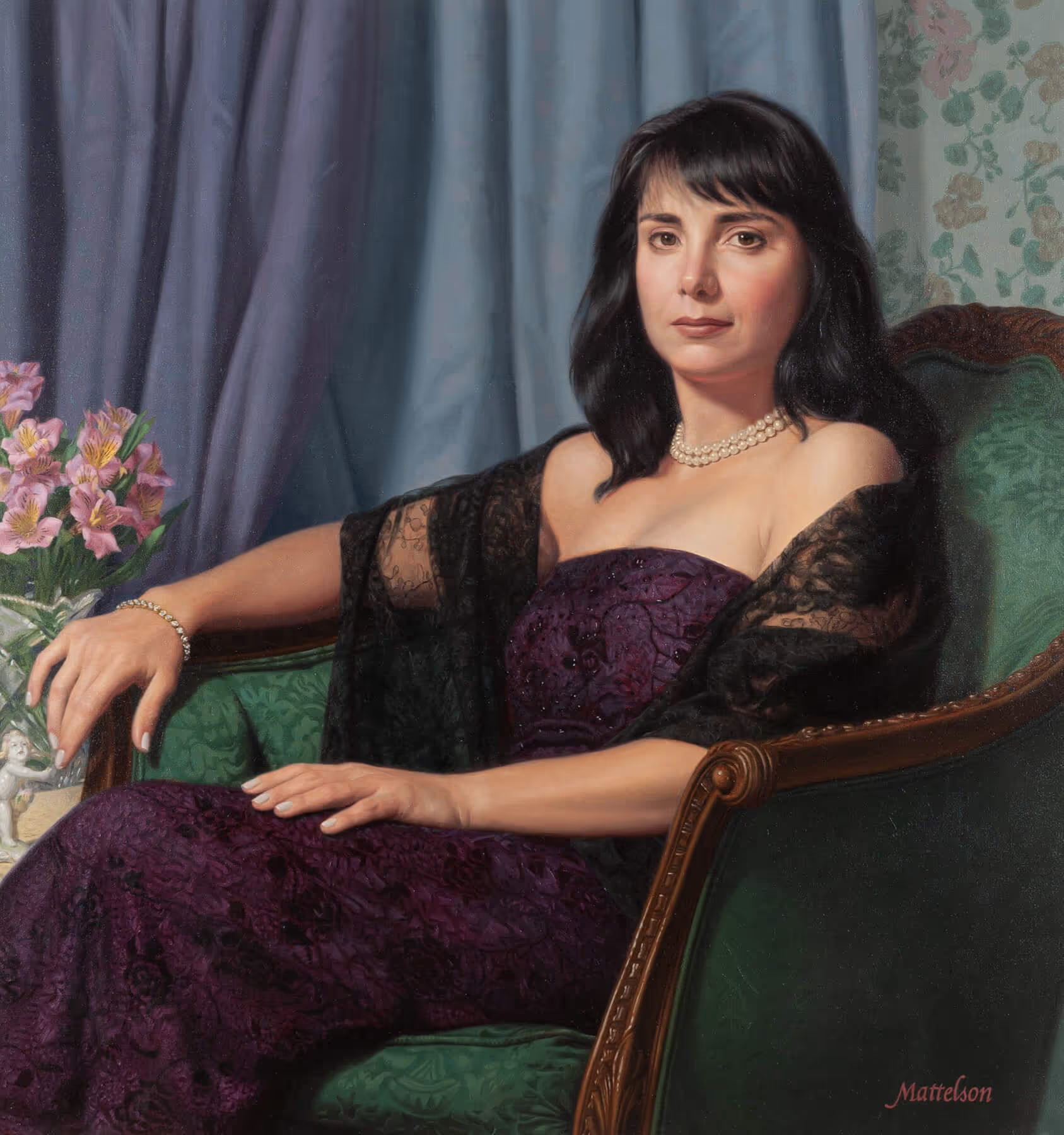
The process of bringing a portrait to life.
That’s where a different kind of decision-making begins.
The camera records information. The artist decides what to do with it.
Artists have always needed ways to preserve the visual information required to create a portrait. Before photography, they relied on drawings and studies, dressed lay figures to preserve poses and fabric folds, and sometimes constructed models to study complex settings. Important sitters were rarely expected to remain in position throughout the hundreds of hours required to complete a major painting.
Failing to prepare is preparing to fail.
Photography provides Marvin with a modern way to gather and preserve that information. It doesn't make the artistic decisions. It gives him the raw material from which those decisions can be made.
Before the sitter arrives, Marvin has already set the lighting and camera so the session can remain relaxed and focused. His camera is connected to a computer, allowing the images to be evaluated as they are made. Once the right expression, gesture and lighting emerge, there is no reason to keep searching.
Back in the studio, Marvin develops the reference into a clear visual plan for the painting. Depending on the portrait, that may involve a composite assembled from multiple photographs, a small color study, or both. Neither is intended to reproduce every nuance of the finished painting. Their purpose is to establish the overall composition, color relationships and direction before the final portrait begins.
Posthumous portraits require a different kind of investigation. Marvin studies as many photographs as possible to understand the structure and character of the person. When necessary, he may photograph a model to establish a more appropriate pose, using the existing photographs to recreate the sitter’s likeness. When the available reference is limited, he may even sculpt the head to study how the form responds to the chosen light.
Once the reference and color study are resolved, the final painting can begin.
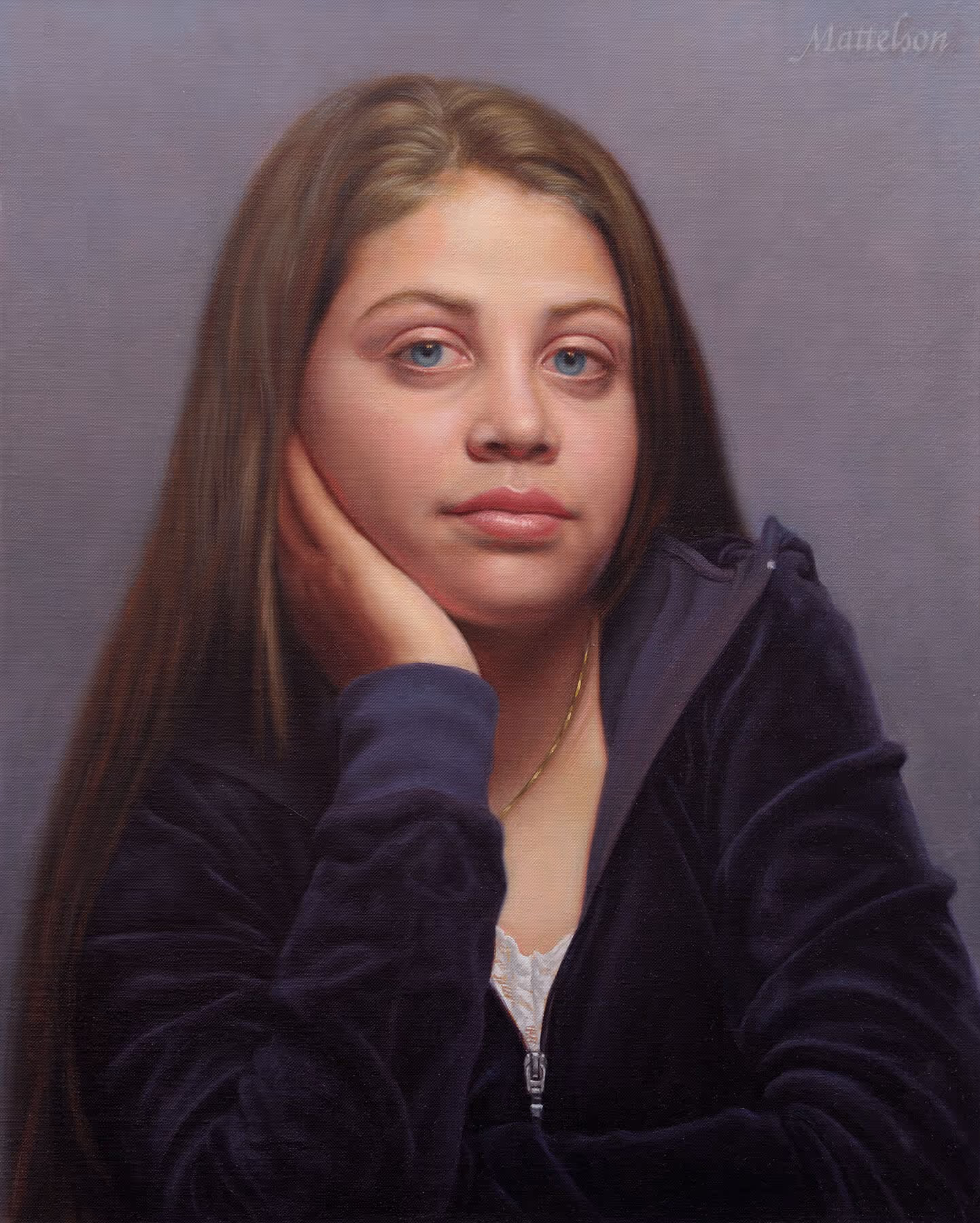
Painting the finished portrait
The focus now is to bring all of the individual elements together into a unified whole. The figure, background, lighting, color and detail can't be treated as separate parts. Everything has to work together.
This is where Marvin’s strategic thinking comes fully into play. The reference provides the information, but the painting determines the decisions. Every adjustment is made in relationship to the whole.
A portrait is painted on a flat surface, but it shouldn't feel flat. Simply copying what is seen is not enough. The artist has to understand how to manipulate what he sees to create the illusion of three-dimensional form and space.
Flesh presents its own challenge. Human skin isn't opaque. Marvin builds his flesh tones with thin, translucent layers of color, creating a greater sense of depth and luminosity. Subtle shifts of warm and cool color help create the sensation of living flesh.
When the painting has reached completion, Marvin will invite you to his studio to see the finished portrait in person, if convenient. Otherwise, he will provide a photograph for your final approval. If desired, Marvin will also help select a frame that complements the finished painting.


